
Fender Precision Bass
The first commercially successful electric bass, a landmark in popular music.

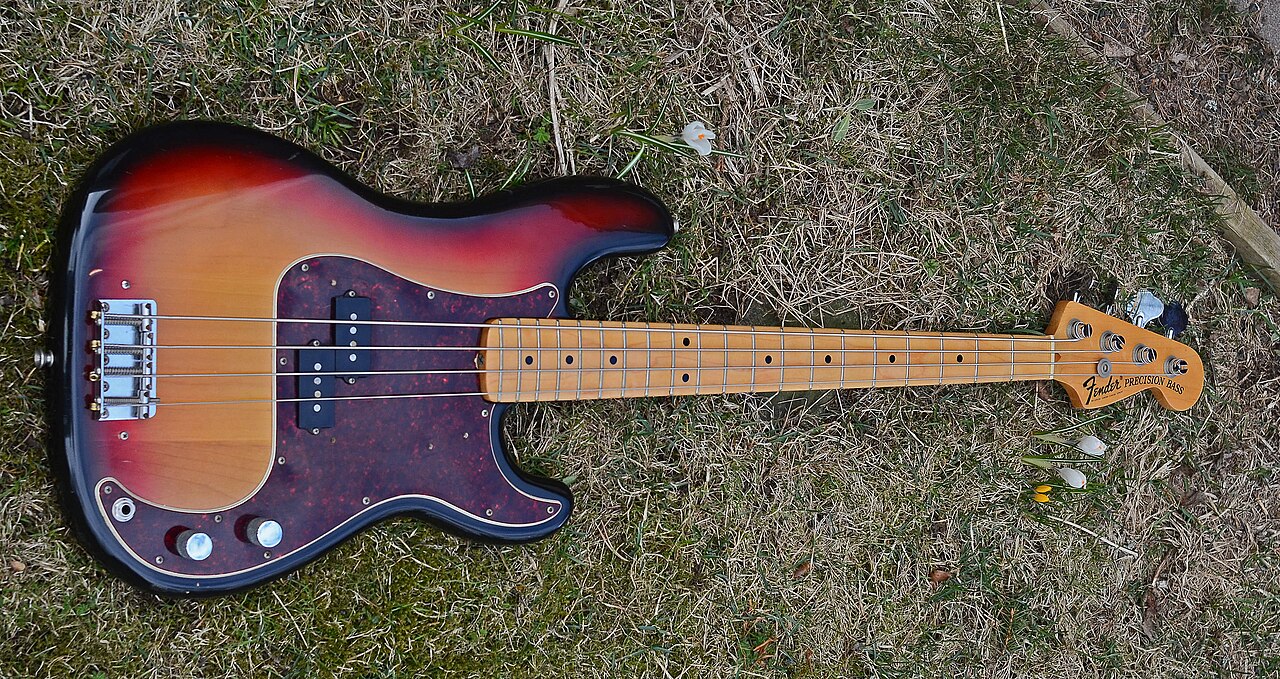
Don Wright from Turku, Finland · CC BY 2.0
The Fender Precision Bass (often shortened to "P-Bass") is an electric bass guitar model manufactured by Fender since 1951. As the first commercially successful electric bass, it was a "landmark in the evolution of musical instruments", delivering "punch and presence while enabling a fleeter, guitar-like playability." Some historians consider the Precision Bass to have had a greater impact on popular music than Fender's widely-known Telecaster and Stratocaster electric guitars. Its companion bass amplifier, the Fender Bassman, also proved influential. Since its release, the Precision Bass has remained among the best-selling and most imitated electric bass guitars.
- Real-World Manufacturer
- Fender
- Instrument Category
- Bass Guitar
- Historical Significance
- First commercially successful electric bass
Verified Timeline
Lore & Background
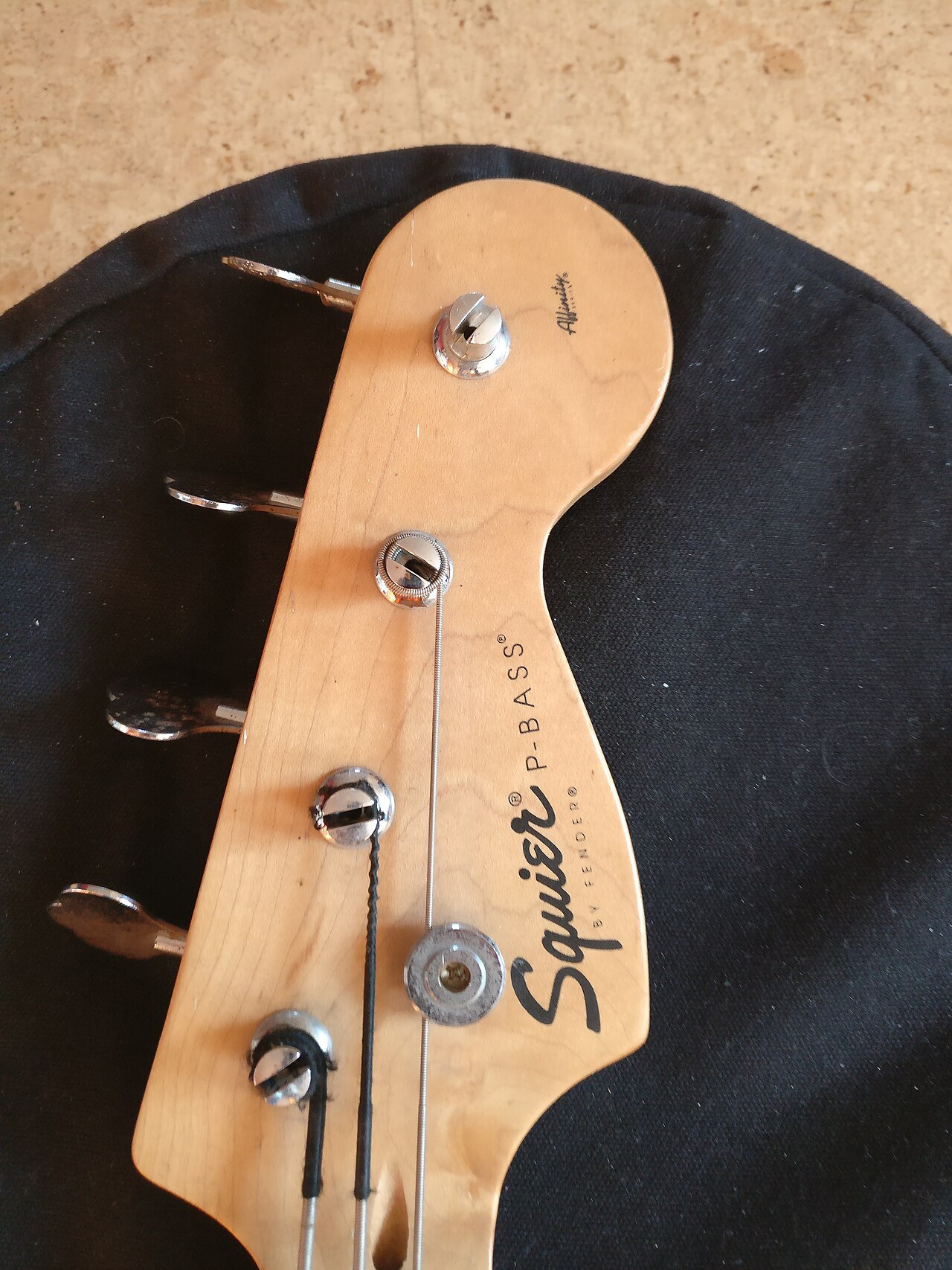
Leo Fender completed and tested the Precision Bass prototype in 1951 for big band bass players, and first production models were released in October 1951. Roy Johnson of Lionel Hampton's big band was among the first bass players to use the Precision Bass in a concert setting. Music critic Leonard Feather wrote about this new development in Down Beat magazine, expressing surprise at hearing bass sounds from a guitar. Adoption by upright bass players was slow, however, and the Precision Bass did not find widespread success until the emergence of new styles of music like rock and roll and Motown, with the Precision Bass's guitar-like format allowing guitarists to easily transition to this new instrument. In 1957, Fender introduced several design changes to its bass, notably altering the headstock and pickguard to more closely resemble those of the popular Stratocaster, and switching to a split-coil humbucker pickup. These 1957 changes became the standard design that continued in production. The Telecaster Bass, introduced in 1968, was a new model based on the Telecaster aesthetic, not a reissue of the original Precision Bass design.
In Their Own Story
Prior to the arrival of electric bass guitars, players relied on upright basses, which were large and cumbersome to transport and increasingly difficult to hear as popular music became louder. At the time, many big bands were downsizing and asking guitarists to double as bass players, creating a need for a guitar-like bass. Fender was not the first to explore the idea of a solidbody electric bass—Audiovox had released such a bass in 1935, but it sold poorly. Leo Fender choosing to design his electric bass to be played at a horizontal angle similar to a guitar allowed guitarists to easily transition to playing bass. The Precision Bass was first offered for sale in October of 1951, making its trade show debut at the July 1952 NAMM Show. Fender applied for the patent in November of 1952, and it was granted on March 24, 1953. The Precision Bass had an initial retail price of $199.50. To promote his bass, Fender traveled the country, trying to win over musicians face-to-face in nightclubs and concert halls, where he found the most interest from jazz players. Bandleader Lionel Hampton became an early champion: his bass player Roy Johnson used it extensively, later stating he had no trouble transitioning to the new bass, which he began using in performances the day he received it.
Reader's Guide
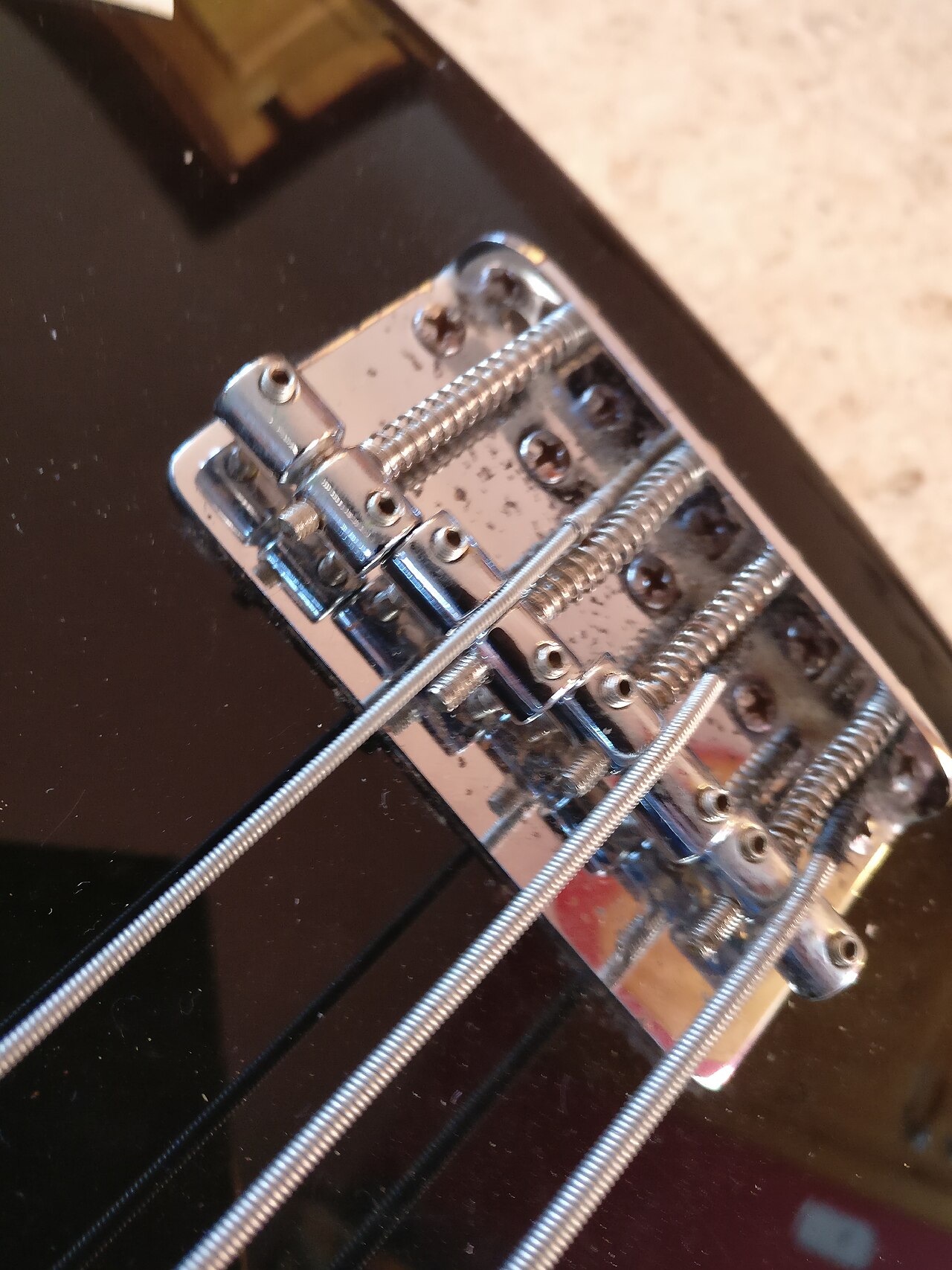
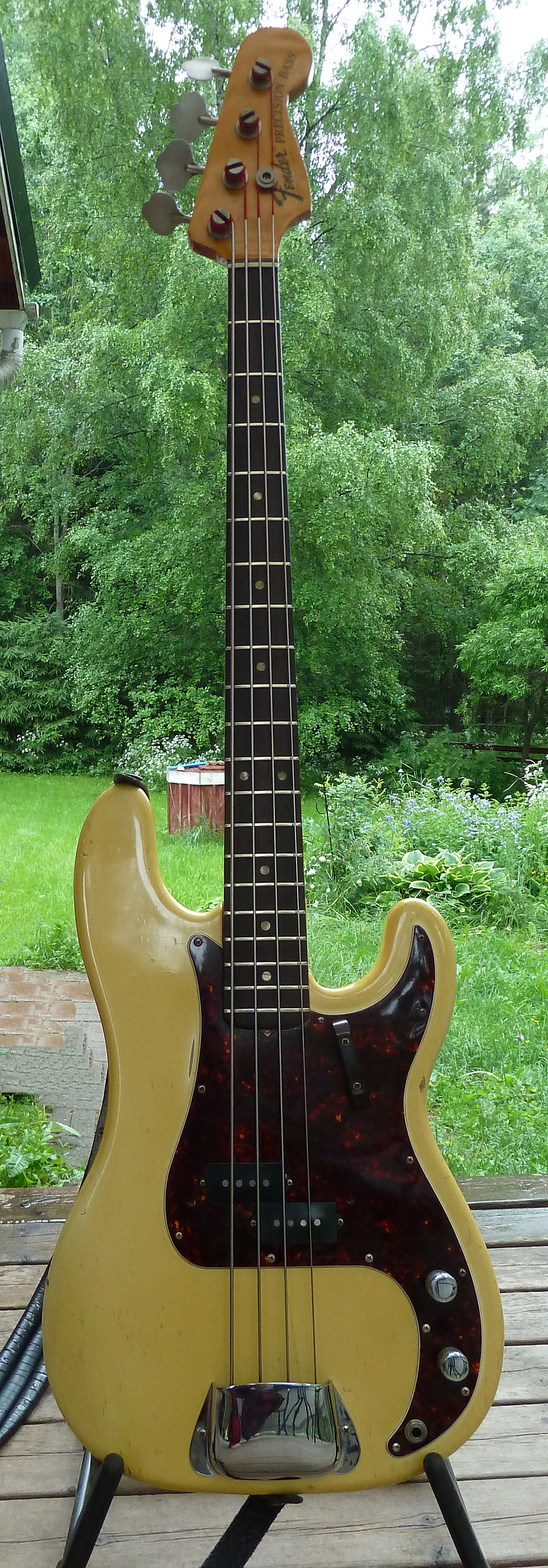
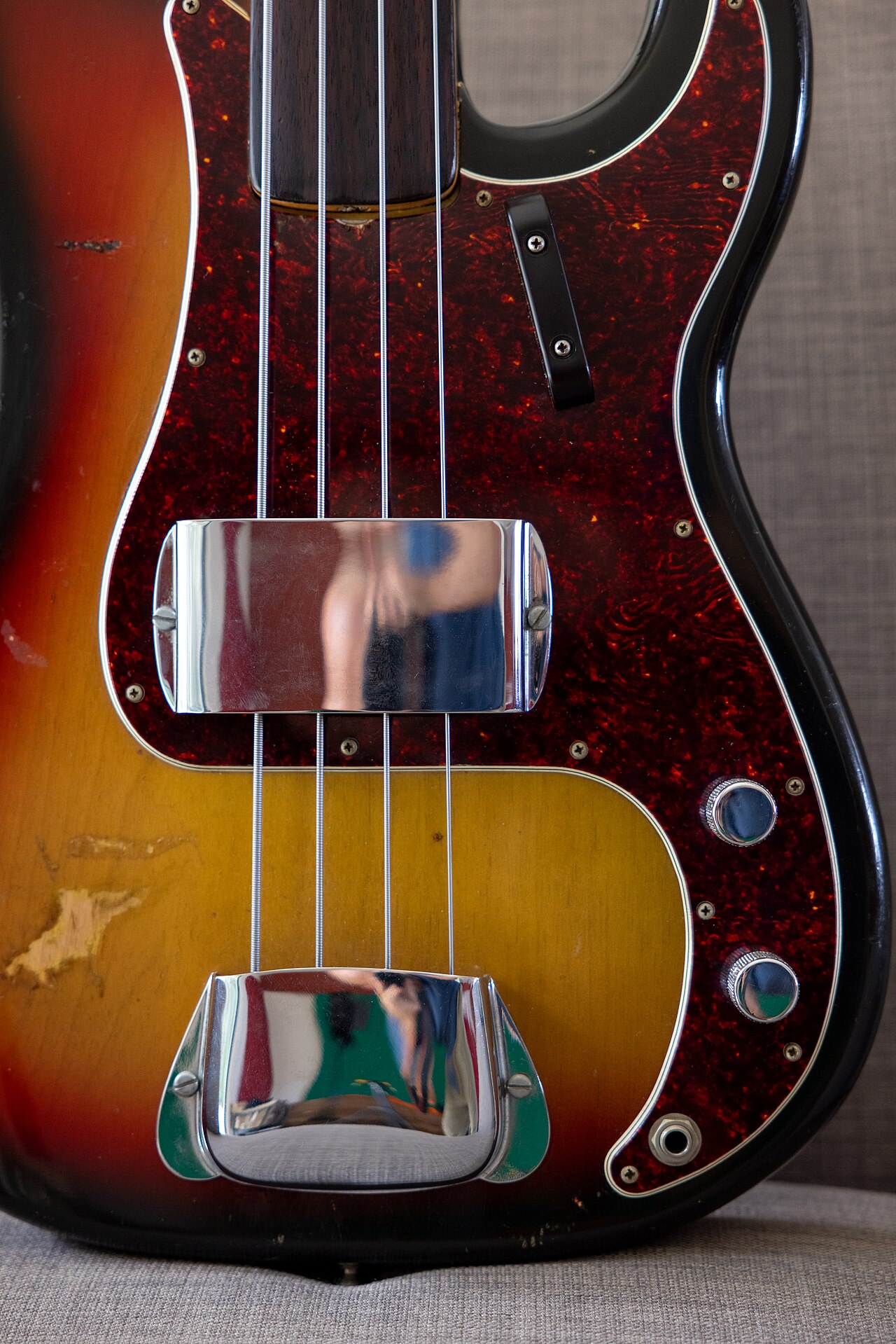
The Precision Bass uses a body shape similar to the earlier Esquire/Telecaster, but with an additional bass-side "horn", creating a double-cutaway silhouette that provided better balance considering the long, heavy neck required of a bass guitar. Fender chose a 34" scale length after much trial and error—long enough to achieve the resonance Fender wanted but short enough to avoid uncomfortably-wide fret spacing. The 34" scale length went on to become standard for "full scale" electric basses. Pre-1957 models used a headstock similar to a Telecaster, but this was later changed to bring it more in line with the Stratocaster's styling. The neck—initially made from a single piece of maple, but with rosewood later offered as a fretboard option—was bolted on using four screws. The neck used a large "C"-shape with a 7.25" radius fretboard, which has earned vintage Precision Bass necks frequent "baseball bat" comparisons. Modern versions typically use a flatter 9.5" radius. Pre-1957, strings were loaded through the body and over a bridge equipped with two pressed fiber saddles; post-1957, the strings were loaded at the bridge, which was later updated with four saddles made of steel. The first pickups consisted of a simple, single-coil design with four Alnico V magnet pole pieces. In 1957, Fender solved the hum problem by splitting the pickup into two separate coils, wired out of phase with the magnets oriented with reverse polarities. These pickups have remained standard in Precision Basses ever since.
Did You Know?
- The Precision Bass was first offered for sale in October 1951 at a retail price of $199.50.
- Music critic Leonard Feather wrote about the Precision Bass in Down Beat magazine, expressing surprise at hearing bass sounds from a guitar.
- The 34" scale length chosen by Fender went on to become the standard for 'full scale' electric basses.
- The Telecaster Bass, introduced in 1968, was a new model based on the Telecaster aesthetic, not a reissue of the original Precision Bass design.
- The Precision Bass's companion amplifier, the Fender Bassman, proved influential—among guitarists even more so than bassists.
Gallery
Frequently Asked Questions
What is the Fender Precision Bass in Rock Band?
It is an unlockable bass guitar instrument that simulates the real-world model created by Fender Musical Instruments Corporation. This virtual gear allows players to experience playing one of history's first mass-produced electric basses within the game.
Why is this specific bass guitar important to music history?
The Precision Bass holds historical significance as the very first mass-produced electric bass, effectively defining modern rock rhythm sections. Its inclusion in Rock Band honors its legacy as a legendary tool used by countless professional musicians.
How do players obtain the Fender Precision Bass in the game?
Fans must unlock this instrument through specific gameplay achievements or by entering codes associated with real-world gear promotions. Once acquired, it becomes available for use on any virtual stage to enhance the realism of your band's performance.
Does using the Fender Precision Bass change how songs play?
No, selecting this bass does not alter song difficulty or note charts compared to other in-game instruments. Instead, its primary function is visual and thematic, offering an authentic representation of classic gear for players who value realism.
Is the Fender Precision Bass available across all Rock Band titles?
Availability depends on the specific game version and whether it was included as part of a legacy import or special edition bundle. Generally, it serves as a collectible item that bridges the gap between real-world instrument history and the franchise's virtual environment.
More in Gear & Customization
Elsewhere in the Rock Band universe
Spotted an error? Know more?
This is a living reference — every entry is fact-audited, and reader corrections feed straight into our audit queue. Suggest an edit · See this site's audit record